Are schools still teaching English the same way they did a decade ago, while the world outside the classroom has completely changed? For students in Classes 1 to 8, English is no longer just a subject to pass exams. It is a life skill that shapes confidence, communication, and future opportunities. This shift is why many schools are rethinking what the best way to learn English really looks like for young learners.
Schools are moving beyond traditional English learning because memorisation and grammar-first methods no longer prepare children for real communication. Modern classrooms are adopting interactive, confidence-based approaches supported by technology, including the right English learning app for kids, to build speaking, listening, and comprehension skills from an early age.
Why Traditional English Learning Is Falling Short
For years, English education focused heavily on textbooks, grammar rules, and written exams. While these elements still matter, they often fail to develop practical language skills. Many students reach middle school able to write answers but unable to speak confidently or understand spoken English fluently.
Teachers frequently observe a pattern. Students know the rules but hesitate to use the language. They fear making mistakes, struggle with pronunciation, and avoid speaking in class. This gap becomes more visible as children progress to higher grades, where communication and comprehension matter more than rote accuracy.
For Classes 1–8, this is a critical stage. Language habits formed now shape confidence for years to come. If students associate English with fear or confusion early on, it becomes harder to reverse later.
The Changing Expectations from English Education
English today is not limited to classrooms or exams. Children encounter it everywhere through digital content, online learning, games, videos, and global interactions. Schools are realising that students need English not just to score marks, but to think, express ideas, and participate confidently.
Parents also expect more. They want their children to speak clearly, understand instructions, and communicate beyond textbooks. This is why schools are asking deeper questions about how to start learning English in a way that feels natural and effective for young learners.
What the Best Way to Learn English Looks Like Today
The best way to learn English for Classes 1–8 is not about abandoning structure. It is about balance. Modern approaches combine foundational reading and writing with strong listening and speaking practice.
Children learn best when language feels alive. Stories, conversations, interactive exercises, and guided speaking help students internalise English instead of memorising it. When children hear and use English regularly, grammar and vocabulary develop more organically.
Schools are also recognising that confidence comes before perfection. A child who speaks imperfect English confidently will improve faster than one who stays silent out of fear.
Why Early Grades Matter the Most
Classes 1–8 are the foundation years. This is when pronunciation patterns form, listening skills develop, and confidence takes root. Waiting until secondary school to focus on spoken English is often too late.
In younger grades, children are less self-conscious and more open to experimentation. They learn language the same way they learn to speak their first language through repetition, listening, and practice. Schools that tap into this natural learning window see stronger long-term results.
The Role of Technology in Modern English Learning
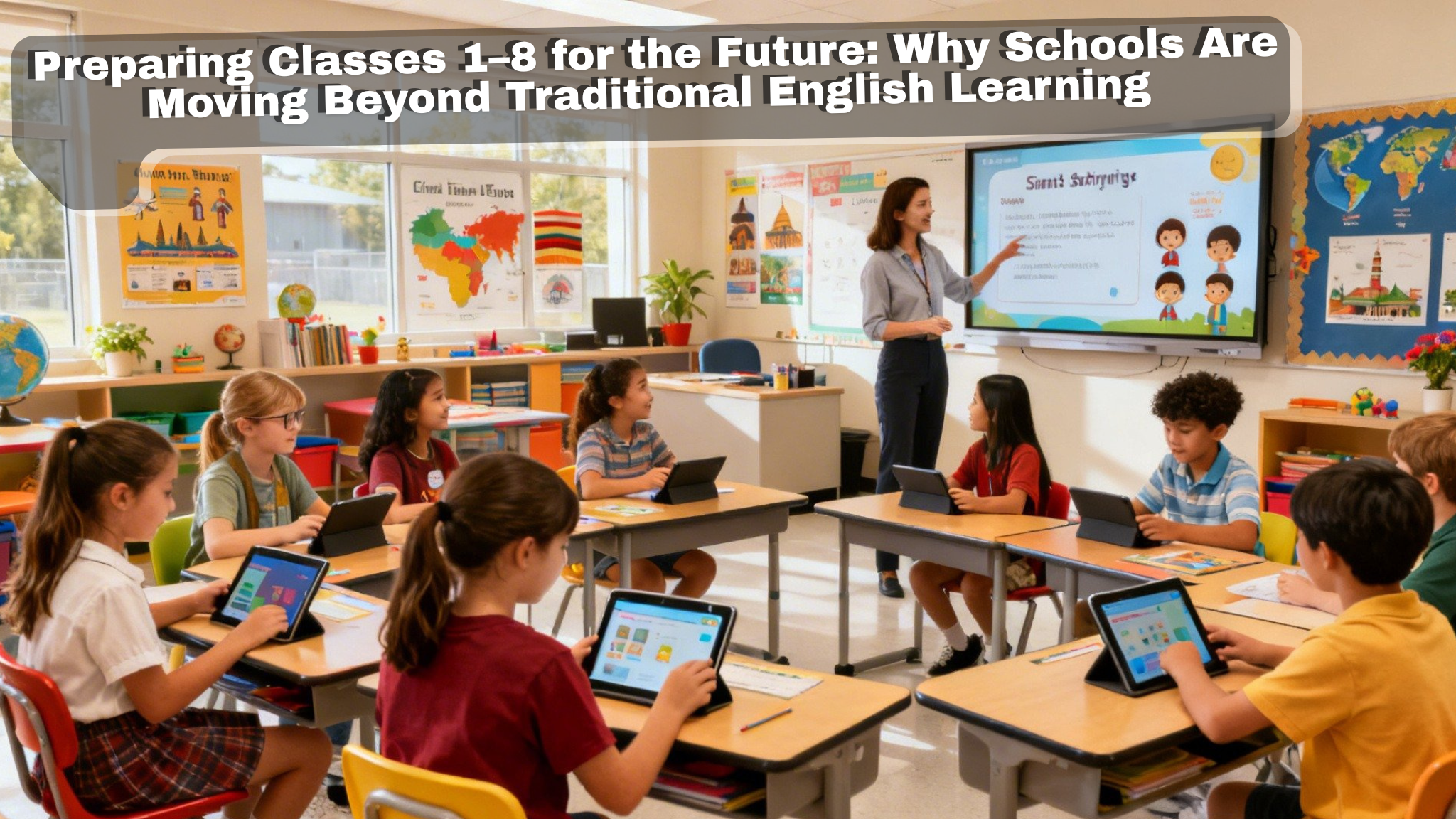
Technology is not replacing teachers. It is supporting them. The right English learning app for kids gives students additional exposure beyond classroom hours. It allows children to practice listening and speaking in a safe, judgement-free environment.
A good spoken English learning app helps children hear correct pronunciation, repeat words, and build confidence gradually. This is especially valuable in classrooms with diverse learning speeds, where not every child gets equal speaking time.
Teachers benefit too. Digital tools provide insights into how often students practice, where they struggle, and how they improve over time. This allows for more personalised support.
Making English Learning Child-Centric
One reason traditional methods struggle is that they are adult-centric. Young learners need engagement, interaction, and encouragement. Schools moving beyond old models focus on child-centric learning experiences.
This includes
- Short, interactive activities instead of long lectures
- Emphasis on listening and speaking alongside reading
- Use of stories, visuals, and real-life situations
- Encouraging mistakes as part of learning
When English feels enjoyable rather than intimidating, students participate more willingly.
How Schools Are Redesigning English Classrooms
Forward-thinking schools are redesigning their English programs to include blended learning. Classroom teaching is supported by structured digital practice. Students listen, speak, read, and respond regularly rather than only writing answers.
This approach ensures that learning continues even outside the classroom. It also helps bridge gaps for students who may not hear English spoken at home.
The focus shifts from “Did the child memorise the lesson?” to “Can the child understand and express ideas in English?”
Addressing Parent and Teacher Concerns
A common concern is whether technology will distract children. The answer lies in choosing the right tools and balance. When guided properly, digital learning enhances focus rather than reducing it.
Another concern is whether grammar will suffer. In reality, grammar improves when children hear and use correct language repeatedly. Spoken fluency and grammar are not opposites. They support each other.
Teachers remain central to this process. Apps and tools assist practice, but guidance, encouragement, and human connection come from educators.
Preparing Students for the Future
The future demands communication skills. Students will need to present ideas, collaborate, and adapt. English will be a medium for learning other subjects, not just a standalone topic.
By moving beyond traditional English learning in Classes 1–8, schools prepare students for this reality. Children grow up seeing English as a tool, not a test.
They learn to listen with understanding, speak with confidence, read with curiosity, and write with clarity.
Conclusion
Schools are not moving beyond traditional English learning because it failed entirely. They are evolving because the world has changed. For Classes 1–8, the goal is no longer just correct answers, but confident communication.
The best way to learn English today blends strong foundations with active usage. With thoughtful classroom practices and the support of the right English learning app for kids, schools can ensure students are prepared not just for exams, but for life.
English learned with confidence in early years becomes a lifelong strength, not a lifelong struggle.
Book a free Zene AI demo and see how English communication can thrive across classrooms without increasing teacher workload.