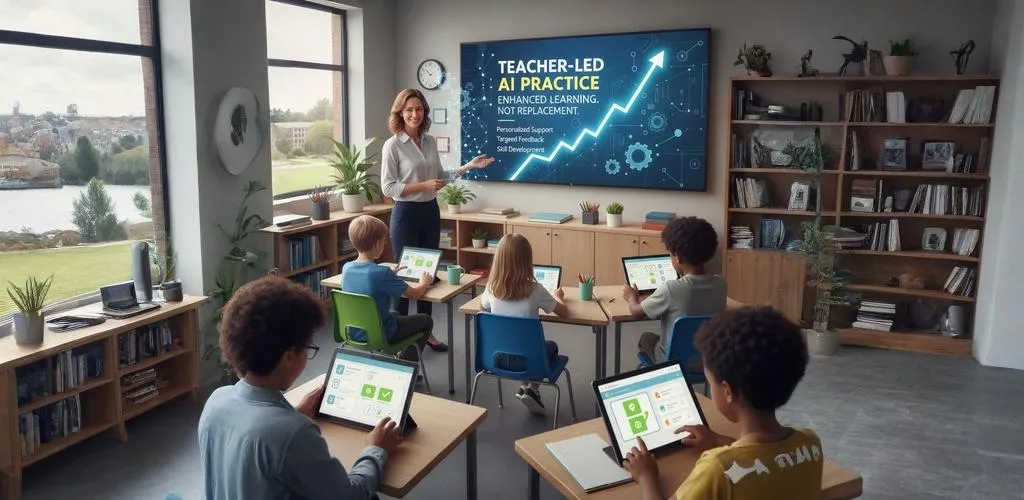
AI in classrooms is changing how students learn English in India, and it works best when teachers are leading the way. Picture a modern school where students practice English vocabulary on tablets, watch grammar or reading comprehension videos, or use apps to revise lessons even before the bell rings.
Meanwhile, many English classrooms still rely on traditional chalk-and-board lectures. This growing gap highlights the need for a smarter approach to education. The solution? Teacher-led AI learning, where educators guide AI tools to create more personalized, interactive, and effective lessons.
Why Teachers Are Still the Heart of Learning
A common concern is: Will AI replace teachers? The answer is a clear no. Teachers bring empathy, cultural understanding, and human judgment—skills AI cannot replicate. In Indian classrooms, often with 40-50 students, these qualities are essential. A student who seems “fine” on an AI platform may still struggle with confidence or language barriers. Only a teacher can notice subtle cues like disengagement, anxiety, or hesitation.
That’s why human-centered AI learning always keeps teachers in control. AI provides data, but teachers make decisions that truly impact learning.
What Teacher-Led AI Learning Really Means
In teacher-led AI learning, AI acts as a helper, not a replacement. Teachers decide:
For example, if a student struggles with grammar, AI can flag the issue. The teacher then chooses whether to provide extra practice, organize a small group activity, or explain the topic with real-life examples. AI provides insights, but the teacher provides context and guidance.
How AI Tools Benefit Teachers in English Classrooms
With high student-teacher ratios in India, AI tools can be transformative:
Personalized Learning for Every Student
AI tracks individual progress and highlights areas needing attention, allowing teachers to tailor support for each learner. This makes lessons more effective and meaningful.
Reduced Administrative Load
Teachers spend hours grading, tracking attendance, and preparing reports. AI automates routine tasks, saving educators 30–40% of their administrative time, so they can focus on teaching.
Early Detection of Learning Gaps
AI can flag students struggling with specific concepts early, giving teachers the opportunity to intervene before gaps widen, especially in large classrooms.
Real-World Benefits of Teacher-Guided AI Learning
When AI is used under teacher guidance, the results are impressive:
Higher Student Engagement: Students feel their learning is personalized and relevant.
Improved Learning Outcomes: Teachers focus on areas needing support, boosting overall performance.
Teacher Satisfaction: Teachers spend less time on repetitive tasks and more on creative teaching and individual guidance.
Making AI Work in English Classrooms
The key to success is integrating AI in ways that respect classroom culture and teaching practices. Teacher-guided AI works best when:
AI supports, not replaces, lesson planning
Teachers control feedback, assessment, and intervention
AI complements cultural and language contexts
Teacher training starts gradually, beginning with one subject or grade level
When implemented thoughtfully, AI becomes a true classroom partner, helping teachers manage large classes, deliver personalized learning, and focus on student outcomes.
Teachers Remain the Heart of AI-Enhanced English Classrooms
Even the most advanced AI cannot replace the human connection in English learning. AI can suggest exercises, track progress, and flag struggling students, but only teachers can motivate, explain, encourage, and connect lessons to real life.
Combining AI in classrooms with skilled teachers is the future of education in India. This approach aligns with NEP 2020 goals, supporting personalized, inclusive, and effective learning experiences for all students.
Conclusion
AI doesn’t replace teachers; it empowers them. With teacher-led AI learning, educators can manage classrooms better, personalize instruction, and make learning more meaningful. AI tools provide insights and practice opportunities, while teachers provide guidance, mentorship, and context.
The classrooms of the future will not see teachers replaced by machines; they will see teachers amplified by AI, giving every student the support, attention, and guidance they deserve.